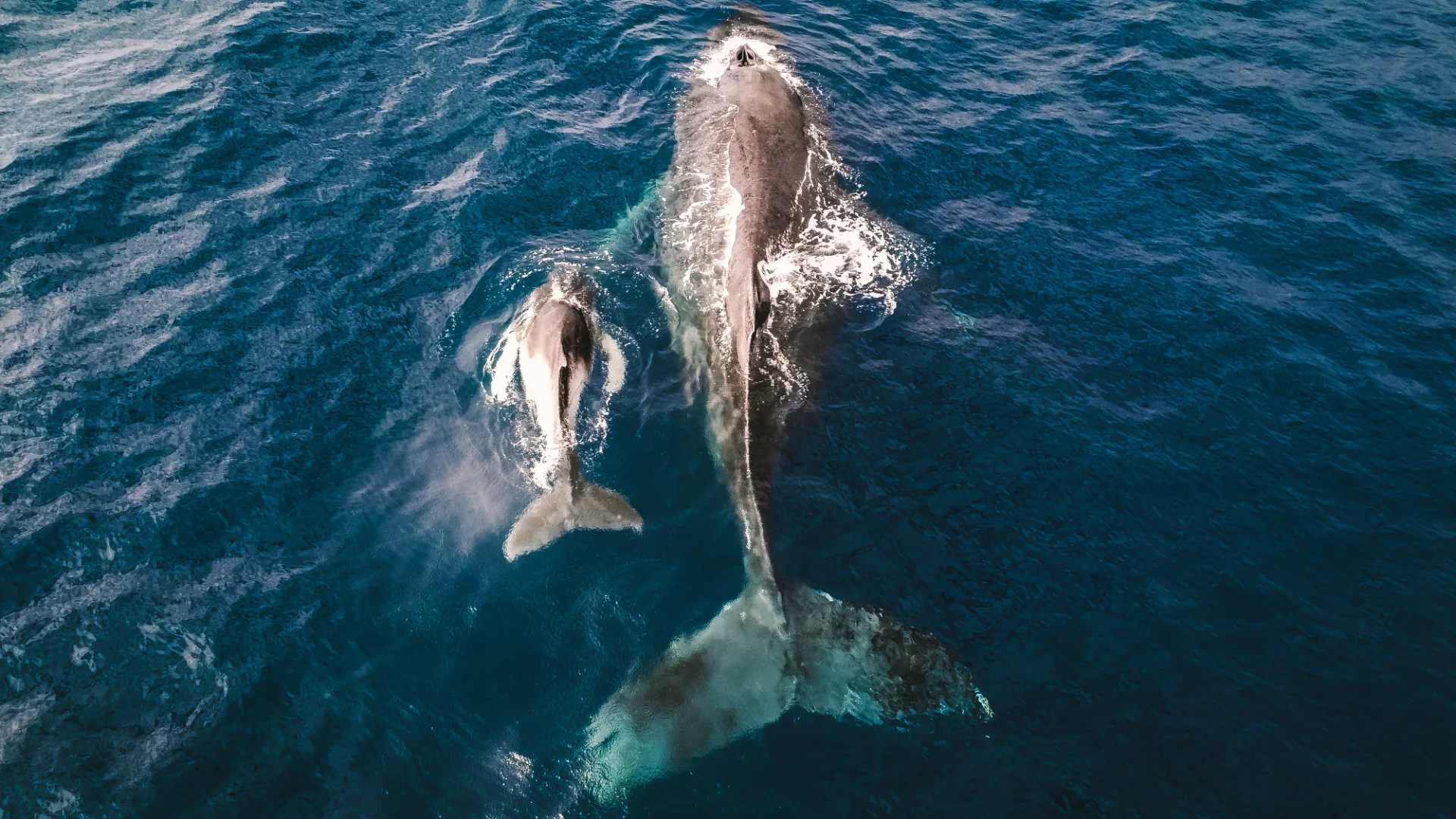
Whale Watching Samaná: The Complete Luxury Traveler's Guide
There are experiences that redefine what travel means to you — and watching a 40-ton humpback whale breach the surface of a warm Caribbean bay, just thirty minutes from your private villa, is absolutely one of them. Whale watching in Samaná is not a side trip. It is, for many visitors, the defining memory of their entire Dominican Republic journey.
Every year between January and March, an estimated 80 percent of the entire North Atlantic humpback whale population converges on Samaná Bay to mate, calve, and nurse their young. The bay's warm, sheltered waters make it one of the most important humpback breeding grounds on the planet — and one of the most accessible for travelers who want to witness it without roughing it.
If you're planning a luxury escape to the Dominican Republic and whale watching in Samaná is on your list, this guide will tell you everything: the best time to go, how the tours work, what to expect on the water, and why staying at Villa Paris in Las Terrenas puts you closer to the action than anywhere else on the island.
---
Why Samaná Bay Is One of the World's Best Whale Watching Destinations
Not all whale watching is created equal. In some destinations, you chase distant spouts from a crowded boat for hours. In Samaná, the whales are simply there — in extraordinary numbers, in a relatively compact bay, during a predictable season that runs January through March with peak activity in February.
The Samaná Peninsula juts out into the Atlantic on the northeastern tip of the Dominican Republic, and the bay it cradles is uniquely protected from open-ocean swells. That combination of warm, calm water and geographic shelter is precisely what draws humpbacks here year after year. Scientists estimate that between 1,500 and 3,000 individual humpback whales pass through or take up temporary residence in the bay each winter season.
What you'll witness on a tour is extraordinary. Male whales compete aggressively for females, hurling their enormous bodies out of the water in full breaches, slapping the surface with pectoral fins in behavior called pec-slapping, and singing complex, haunting songs that can be heard through the hull of your boat. Mothers with newborn calves rest in shallower waters. It is, without overstatement, one of the great wildlife spectacles on earth.
---
When to Go: The Samaná Whale Watching Season
The whale watching season in Samaná runs from January 15 through March 31 each year, with the Dominican government enforcing strict regulations on when boats are permitted to operate. This isn't arbitrary — it protects both the animals and the quality of the experience for visitors.
February is widely considered the peak month. Whale density in the bay is at its highest, activity above the waterline is most dramatic, and the weather is typically dry and sunny, with light winds and calm seas. January is excellent as well, with slightly fewer boats on the water and a quieter atmosphere overall. March remains productive, though some whales begin their migration north toward New England and Iceland as the month progresses.
If your travel dates have any flexibility, aim for the first two weeks of February. You'll encounter the most competitive male groups — known as competitive pods — and the highest likelihood of witnessing full breaches and other surface-active behavior. The water temperature sits comfortably around 78–80°F, making the experience pleasant even for those who aren't seasoned sailors.
---
How Whale Watching Tours in Samaná Work
The main departure point for whale watching tours is the town of Samaná (officially Santa Bárbara de Samaná), located approximately 30 minutes by car from Las Terrenas along the scenic coastal road. The drive itself is beautiful — winding through lush hillside forest with glimpses of the bay opening below you.
Tours typically depart in the morning, between 8 and 9 a.m., and last three to four hours on the water. Most reputable operators use covered catamaran-style vessels that are comfortable and stable, with shade areas, seating, and onboard naturalist guides who provide narration in English, French, and Spanish. You are not crammed onto a party boat — the better operators cap group sizes and maintain a professional, educational atmosphere.
Once in the bay, vessels follow strict government protocols: boats must maintain minimum distances from the whales, approach at slow speeds, and cut engines when whales surface nearby. These rules exist to protect the animals, but they also produce extraordinary encounters — whales are naturally curious and will sometimes approach stationary boats entirely on their own terms, surfacing just meters away.
Víctor Borge's Whale Samaná is the most established and well-regarded operator in the bay, running tours since the 1990s with naturalist commentary backed by decades of observation. Booking in advance is strongly advised, especially for February travel.
---
What to Expect On the Water
The honest answer to "what will I see?" is: it depends on the day, but the floor is remarkably high. Even on a quiet morning, you will see multiple humpback whales at close range. The signature behaviors — the blow (the explosive exhalation that rises 15 feet into the air), the fluke display as a whale dives, the pec-slap — are virtually guaranteed on any functional tour day.
The spectacular moments — the full breach, where a whale launches its entire body clear of the surface before crashing back down in an eruption of white water — tend to happen without warning and are over in seconds. Keep your camera ready and your eyes on the water rather than your screen. The sound of a breach, the percussive boom it makes when the whale lands, is something that stays with you.
Some mornings the bay is electric with activity. Competitive pods of three to six males in pursuit of a single female will surface repeatedly over the span of an hour, traveling at speed, crashing into one another, singing and fighting. Other mornings are gentler — a mother and calf resting in flat calm water, the calf practicing its own breaches nearby, small and clumsy and completely captivating. Both are unforgettable.
Dress in light layers; the open water can feel breezy even when the temperature is warm. Sunscreen and polarized sunglasses are essential. If you're prone to motion sickness, take precautions before boarding — the bay is generally calm, but swells do occur.
---
Beyond the Bay: Other Samaná Peninsula Experiences Worth Pairing
The whale watching season conveniently aligns with what many consider the finest weather window of the year on the Samaná Peninsula, making it an ideal time to explore everything else this extraordinary corner of the Dominican Republic has to offer.
Playa Cosón, roughly 15 minutes from Las Terrenas, is consistently voted one of the finest beaches in the entire Caribbean — a wide, palm-fringed arc of pale sand meeting turquoise water, with virtually no commercial development and a serene, almost private feel. Playa Las Ballenas ("Whales Beach" — the name is no coincidence) is a shorter walk from the village and offers excellent snorkeling, beachfront restaurants, and that classic Las Terrenas atmosphere of French and Italian expats mingling with local Dominican culture in the most effortless way.
For the adventurously inclined, Playa Rincón — about 45 minutes east — is frequently cited as one of the most beautiful beaches in the Dominican Republic, accessible only by boat or a long dirt track, which keeps it genuinely pristine. ATV tours through the interior, horseback riding along the coast, scuba diving, and kitesurfing at El Portillo round out the activity menu for guests who want to fill every hour of their stay.
The dining scene in Las Terrenas punches far above its weight for a small Caribbean town. Le Bistrot de Pierre and Café de Paris reflect the strong French expat influence with genuine Gallic technique applied to local seafood. El Pescador does fish and lobster with serious skill. Ocho Locos brings a louder, more festive energy. La Hermita is the kind of place you find by wandering and then return to every evening. This is not resort-buffet Caribbean dining — it is a genuinely interesting food town.
---
Why Las Terrenas Is the Best Base for Whale Watching in Samaná
Travelers sometimes base themselves in the town of Samaná when planning a whale watching trip, reasoning that proximity to the dock is the priority. It's an understandable instinct, but it overlooks what Las Terrenas offers — and the drive from Las Terrenas to the Samaná ferry dock is only 30 minutes along a beautiful coastal road.
Las Terrenas is simply a more sophisticated, more enjoyable place to spend a week. The beaches are better, the restaurant scene is better, the energy is more international and refined, and the accommodation options are far more interesting than the limited hotels in Samaná town. You can whale watch in the morning and be back on Playa Las Ballenas with a cold Presidente in hand by early afternoon.
For a group of friends or a family traveling together, there is no better way to experience this part of the Dominican Republic than from a private villa — and Villa Paris is the most compelling option in Las Terrenas.
---
Stay at Villa Paris: Your Private Base for Whale Watching Samaná
Perched on an elevated hillside above Las Terrenas, Villa Paris delivers 180-degree panoramic views of the Caribbean Sea and the Samaná mountains from every outdoor space. Wake up to that view, have your coffee on the terrace, and be standing on the dock in Samaná for your morning whale watching tour — all before 9 a.m.
The villa sleeps up to eight guests across three beautifully appointed en-suite bedrooms, making it ideal for families, small friend groups, or couples traveling together who want privacy without sacrificing space. The private infinity pool is positioned to face the ocean directly — there are few better places to decompress after a morning on the water than floating in warm water while watching the sea change color as the afternoon light shifts.
The full chef's kitchen means you can stock up at Las Terrenas' excellent local markets and cook when you feel like it, while the outdoor dining terrace is the kind of space that makes everyone linger longer over a meal than they intended. Rates start from $219 per night booked directly at stayvillaparis.com/book — a remarkable value for a property of this quality in one of the Caribbean's most genuinely special destinations.
To ask about availability, reach the Villa Paris team directly on WhatsApp at +1 (829) 613-0294 or by email at hello@villaparis.com. The team is responsive, local, and genuinely invested in making your stay exceptional.
---
Planning Your Whale Watching Samaná Trip: Practical Summary
The information you need, condensed: book your whale watching tour through Whale Samaná (Víctor Borge) and do so well in advance for February dates. Target January through March, with early-to-mid February as the statistical peak for surface activity. Travel from Las Terrenas to Samaná town takes approximately 30 minutes. Depart the villa by 7:30 a.m. for an 8 or 8:30 a.m. tour departure.
El Catey International Airport (AZS) on the Samaná Peninsula is the recommended arrival point — it places you roughly 1.5 hours from Villa Paris and entirely avoids the Santo Domingo traffic that routes through Punta Cana or Las Américas would require. Direct flights from North America and Europe serve AZS seasonally; otherwise, connecting through Punta Cana or Santo Domingo and driving is straightforward.
Samaná is not Punta Cana. There are no all-inclusive mega-resorts, no cruise ship crowds, no artificial entertainment complexes. What there is: one of the most beautiful corners of the Caribbean, a community of people who chose to live here for the right reasons, and from January through March, the annual miracle of the whales. Come with a spirit of genuine curiosity, stay somewhere worthy of the destination, and you will leave with stories that last.
Explore Villa Paris amenities and features | View the photo gallery | Check nightly rates and availability | Book your stay directly
Frequently Asked Questions
When is the best time for whale watching in Samaná?
The official whale watching season in Samaná runs from January 15 through March 31, with February widely considered the peak month. Humpback whale density in the bay is at its highest in early-to-mid February, and surface activity — breaching, pec-slapping, competitive pod behavior — is most dramatic during this period. The weather is also typically dry and sunny, with calm seas ideal for boat tours.
How far is Las Terrenas from the Samaná whale watching tours?
Las Terrenas is approximately 30 minutes by car from the town of Samaná, where the main whale watching tour operators including Whale Samaná depart from the waterfront dock. The drive is scenic, following a coastal road through the hills of the peninsula. Staying in Las Terrenas at Villa Paris gives you easy access to the tours while enjoying a far superior base town with better beaches and dining.
How do I book a whale watching tour in Samaná?
The most established and reputable operator is Whale Samaná, run by Víctor Borge, who has been guiding tours in the bay since the 1990s. Tours typically depart between 8 and 9 a.m., last three to four hours, and include naturalist commentary in English, French, and Spanish. Advance booking is strongly recommended, especially for February travel — tours sell out weeks ahead during peak season.
What should I bring on a whale watching tour in Samaná?
Sunscreen and polarized sunglasses are essential, as glare on the water is intense even on overcast days. Dress in light layers — the bay can feel breezy at speed even when air temperatures are warm. Bring a camera with a telephoto lens if you have one, but keep it ready rather than looking through a screen constantly. If you are prone to motion sickness, take medication before boarding as the open bay does occasionally have swells.
Is Las Terrenas a good base for a whale watching trip, or should I stay in Samaná town?
Las Terrenas is a significantly better base than Samaná town for most travelers. The beaches — particularly Playa Cosón and Playa Las Ballenas — are among the Caribbean's finest, the restaurant scene is exceptional, and the overall atmosphere is more refined and cosmopolitan. The drive to the Samaná dock takes only 30 minutes. Staying at Villa Paris in Las Terrenas means you can do your morning whale watching tour and spend the afternoon at the beach or the villa's infinity pool with panoramic Caribbean views.
Las Terrenas · Dominican Republic
Stay at Villa Paris
Private infinity pool · Panoramic sea views · 3 bedrooms · From $199/night
Book Direct